
Finger jointing in wood processing: strength through gluing
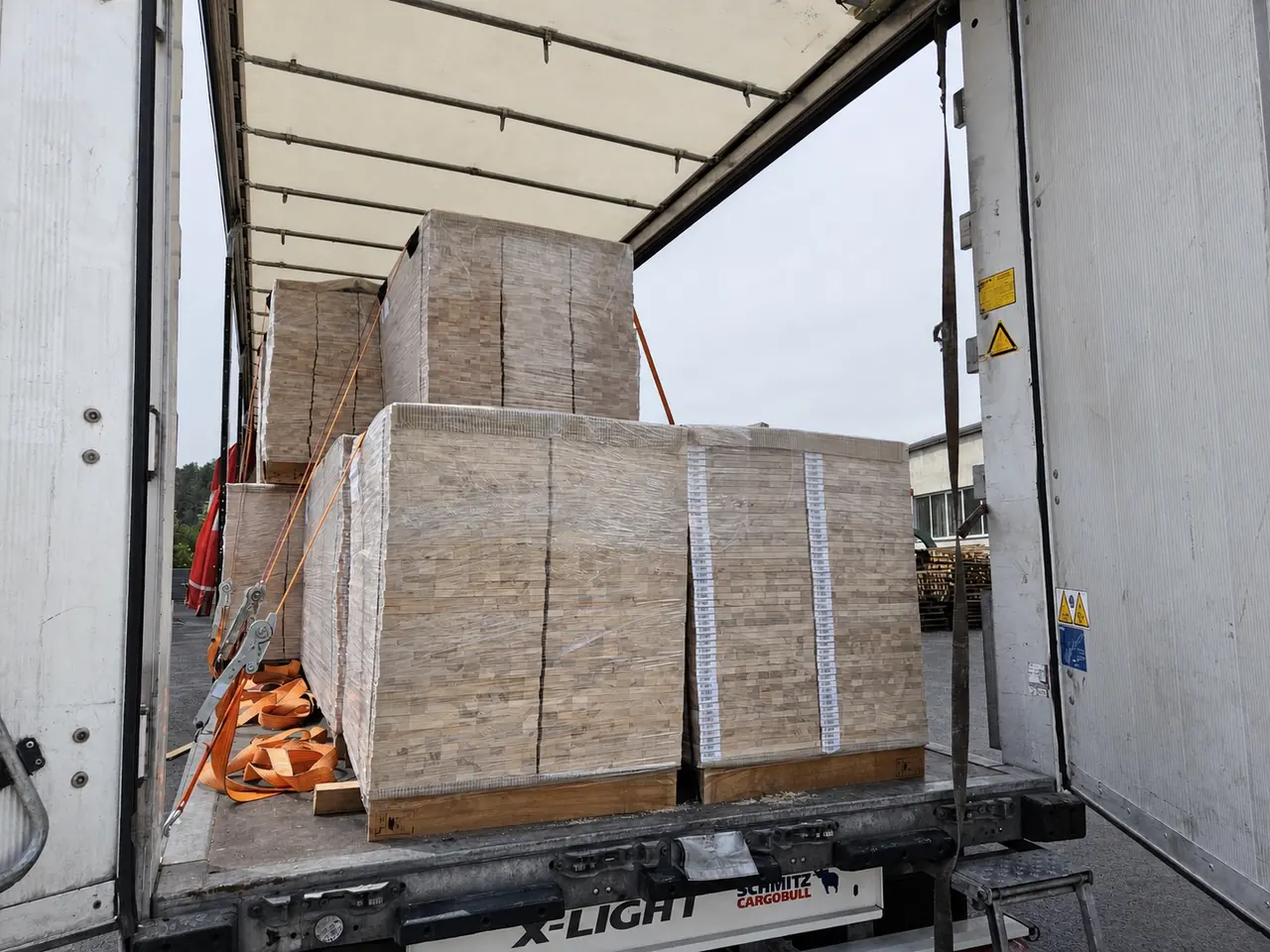
The finger joint is one of the most important processes in modern wood processing. It allows shorter, sound pieces to be joined into long, stable elements — with a joint that, properly made, is almost as strong as the wood itself.
The idea is simple: matching “fingers” are milled into the ends of two pieces. When the fingers are glued and pressed together, a large gluing area is created relative to the cross-section. It is this enlarged area — not mere end-grain contact — that gives the joint its load-bearing capacity.
Finger geometry is not arbitrary — finger length, pitch and slope determine the balance between strength and material yield. Longer fingers give more area and a stronger joint but consume more wood per joint. Short fingers are more economical and are used where the load allows. The key is consistency: the same finger profile and the same pressure from piece to piece.
The choice of glue depends on the application. For interior use, PVAc class D3 is sufficient, while for elements exposed to moisture — such as window scantlings — a D4 glue of higher resistance is used. The process parameters matter too: open time, clamping pressure and curing time, because the final strength depends on them.
Finger jointing is also the basis of lamination. In three-layer window scantlings, the lamellas are not only joined lengthwise but also stacked so that the growth rings of adjacent layers run in opposite directions. Stresses that would warp a solid piece cancel each other out, so the laminated scantling is more dimensionally stable than solid timber — which is why it has become the standard for quality joinery.
For the customer, the benefits are concrete: better raw-material yield and a lower price per metre, removal of defects before installation, availability of lengths that solid timber can barely deliver and — above all — predictable stability. With joint control and clean glue lines, the result is an element that behaves the same across the whole batch.
The best sides of finger jointing show when compared with a solid piece of the same length. Solid timber must be defect-free along its whole length, which is rare and expensive; finger jointing, by contrast, lets defects be cut out and sound parts joined — so raw-material yield is far higher and waste lower. At the same time, evenly distributed joints and opposing grain orientation give an element that is more stable and straighter than solid wood, available in lengths a single tree can barely provide.
That is why a jointed and laminated element is the best choice for joinery and furniture: it combines strength, stability and a lower price with less waste — today both an economic and an environmental advantage. The customer gets a long, straight, predictable element with no hidden defects, with a joint that carries load almost as well as sound wood does. This combination of reliability and rational cost is exactly why finger jointing has become the industry standard.