
Wood pellet production: from sawdust to 6 mm pellets
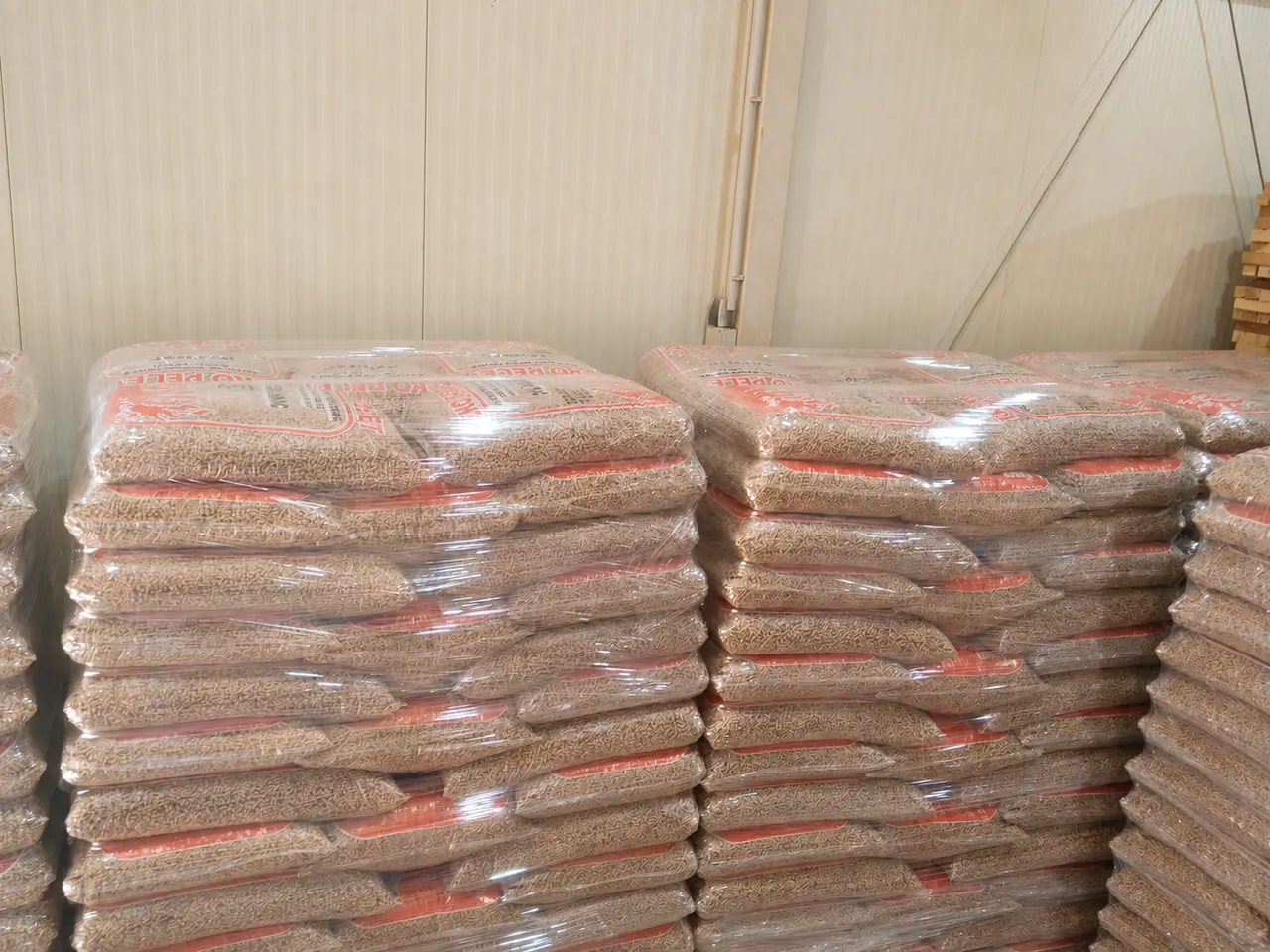
The wood pellet is one of the most efficient solid fuels — dense, dry and uniform, with a high calorific value per unit of volume. Its quality is no accident but the result of a series of controlled steps that turn fine wood material into a stable, clean product.
The raw material is our own sawdust and shavings from the sawmill and processing — mostly spruce and fir with a share of beech. This closes the loop: the residue from component production becomes the raw material for pellets, with no foreign additives. The first step is milling to obtain a uniform grain size suitable for pressing.
Moisture is decisive. The raw material is dried to a low, controlled moisture (around 10%), because too much moisture gives a soft, crumbling pellet, while too little hinders binding. The dried material is then conditioned — briefly treated with steam or moisture — to activate lignin, the natural binder the wood already contains, so no artificial additives are needed.
Then comes pressing, the heart of the process. Rollers force the material through a die with 6 mm diameter holes. Pressure and friction generate heat that plasticises the lignin; as it cools, it binds the particle into a firm cylinder. A knife at the outlet cuts the pellets to a length of 3.15 to 40 mm. It is the pressure and temperature at this step that determine the density and durability of the pellet.
The hot pellet goes straight to cooling, where the lignin hardens and the pellet gains its final strength. It is then screened to remove fine dust, leaving a clean product of uniform size. Only after cooling does the pellet have its full mechanical durability — the ability to withstand transport and handling without breaking up.
We check the finished pellet against the key parameters: calorific value (≥ 16.5 MJ/kg), ash content (≤ 0.7%), mechanical durability (≥ 97.5%) and moisture (≤ 10%) — values in the ENplus A1 class range. It is supplied in 15 kg bags on foil-wrapped pallets or in bulk, ready for distributors and large buyers throughout the heating season.
The best sides of pellets come through in comparison with traditional firewood. Thanks to low moisture and high density, a pellet has a higher calorific value per unit of volume than split logs, burns cleaner and leaves very little ash. The uniform shape allows automatic feeding in stoves and boilers, so heating with pellets is as convenient as gas or oil — but on a renewable fuel. And because it is made from our own sawdust, it consumes no additional tree: it uses what would otherwise be waste.
That is why pellets are the best choice for end users and distributors alike: high efficiency and clean combustion mean lower costs and less maintenance, while the renewable origin and closed raw-material loop make them an environmentally sound choice. For the wholesale buyer, consistent parameters from batch to batch and reliable delivery through the heating season mean a product you can count on — a fuel that sells easily because it delivers what it promises.